Understanding and Coping With Loss: Advice from Cornerstones of Care

3 November 2026
“Some things cannot be fixed. They can only be carried.” — Megan Devine
Cornerstones of Care spent the month of October discussing and sharing resources on the topic of loss. Whether we’re mourning a loved one or adjusting to a major life change, loss can affect our emotions, relationships, and everyday lives.
At Cornerstones of Care, understanding loss is central to our trauma-informed approach. We’re certified in The Sanctuary Model, a framework that guides how we support children and families, educate professionals, and care for one another within our organization. Coping with loss is one of the Sanctuary Model’s core tenets.

Día de los Muertos parade on Reforma Street, Mexico City, Mexico.
Our internal Sanctuary Committee reinforces the Sanctuary Model principles by selecting a monthly theme, sharing resources, and encouraging discussions about the topic across the organization. Loss was selected for October in recognition of Día de los Muertos (Day of the Dead), a Mexican tradition honoring loved ones who have died. Families create ofrendas, or altars, with photographs, meaningful objects, and favorite foods to celebrate and remember them.
Our October activities culminate in an ofrenda-building competition and participation in a Día de los Muertos parade on November 7.
Here’s what we learned this month about loss, grief, and how to cope with it from our Sanctuary committee and each other.
Understanding the Many Forms of Grief
Grief is a natural response to losing someone or something important to us. While commonly associated with death, it can also follow the end of a relationship, a change in health, a career transition, or other major life changes.
Feelings of grief may include sadness, anger, shock, guilt, or confusion, and can affect everything from sleep to daily routines.
There is no correct way to grieve, and healing doesn’t follow a predictable timeline. A person may feel relatively well one day and overwhelmed the next. These fluctuations are normal.
Recognizing these differences is an important part of trauma-informed care. Rather than assuming what someone needs, we can offer compassion and space to process loss in their own way.
Coping With Loss: Advice From Our Team
In discussions encouraged by the Sanctuary Committee, Cornerstones of Care employees shared personal experiences and strategies that have helped them navigate grief.
Their reflections offer practical ideas for anyone experiencing loss or supporting someone who is.
Give Yourself Grace
One employee reminded colleagues that grief isn’t something we can simply push aside:
“I think that we are often our own worst critic, so have grace for yourself. The feelings are not going to go away, no matter how hard you try to hide from them.”
Allowing ourselves time to experience difficult emotions, without judging how we’re handling them, can be an important part of coping with loss.
Another colleague shared, “You find a way to carry your grief and loss. Honestly, you don’t even have to carry it well. You just have to carry it honestly.”
Birthdays, holidays, and anniversaries can bring renewed feelings of grief. Coping by honoring your grief can help, and as one employee recommended, consider planning ahead for these occasions, particularly during the first few years after a loss, to ensure support is available.
Find Connection With Others Who Understand
People who have experienced similar losses can offer reassurance and perspective.
One employee described how helpful it can be to hear others explain that grief comes in waves, or to discover a term like “grief ambush” for those unexpected moments when powerful emotions suddenly return.
One employee shared, “My beloved dog died in the spring, a few weeks after I had a baby. I was so overcome with grief that I joined a pet loss support group. Talking with others helped me understand why losing a pet can be so overwhelming. You share a whole little world with them, from daily routines to constant companionship. When they’re gone, your everyday life changes, and reminders of them are everywhere. At first, I felt embarrassed by how shattered I was. Validation from the group put an end to the shame I experienced about my devastation over my dog’s death.”
Connection might come through a book, a support group, or a conversation with someone who has experienced loss. What’s important is finding support that feels right for you, when you’re ready.
Use Journaling to Process Grief
Journaling doesn’t have to mean writing traditional diary entries. As one employee put it, “A practice that really helps me is journaling in whatever way that is. Creative journaling, brain dumps, scrapbooking. It’s a great way to start processing the feelings and have that inner dialogue with yourself.”
For some, journaling also provides a way to maintain a connection with someone who has died.
One employee shared a practice inspired by a friend: “My friend lost her mom in 2020 and started a ‘Things I Would Have Told My Mom” journal. I bought my own when my dad died in 2024. When something big happens, or I notice something we both would have thought was funny, I write in the journal using the exact words I’d use if he were still here.”
Create Rituals
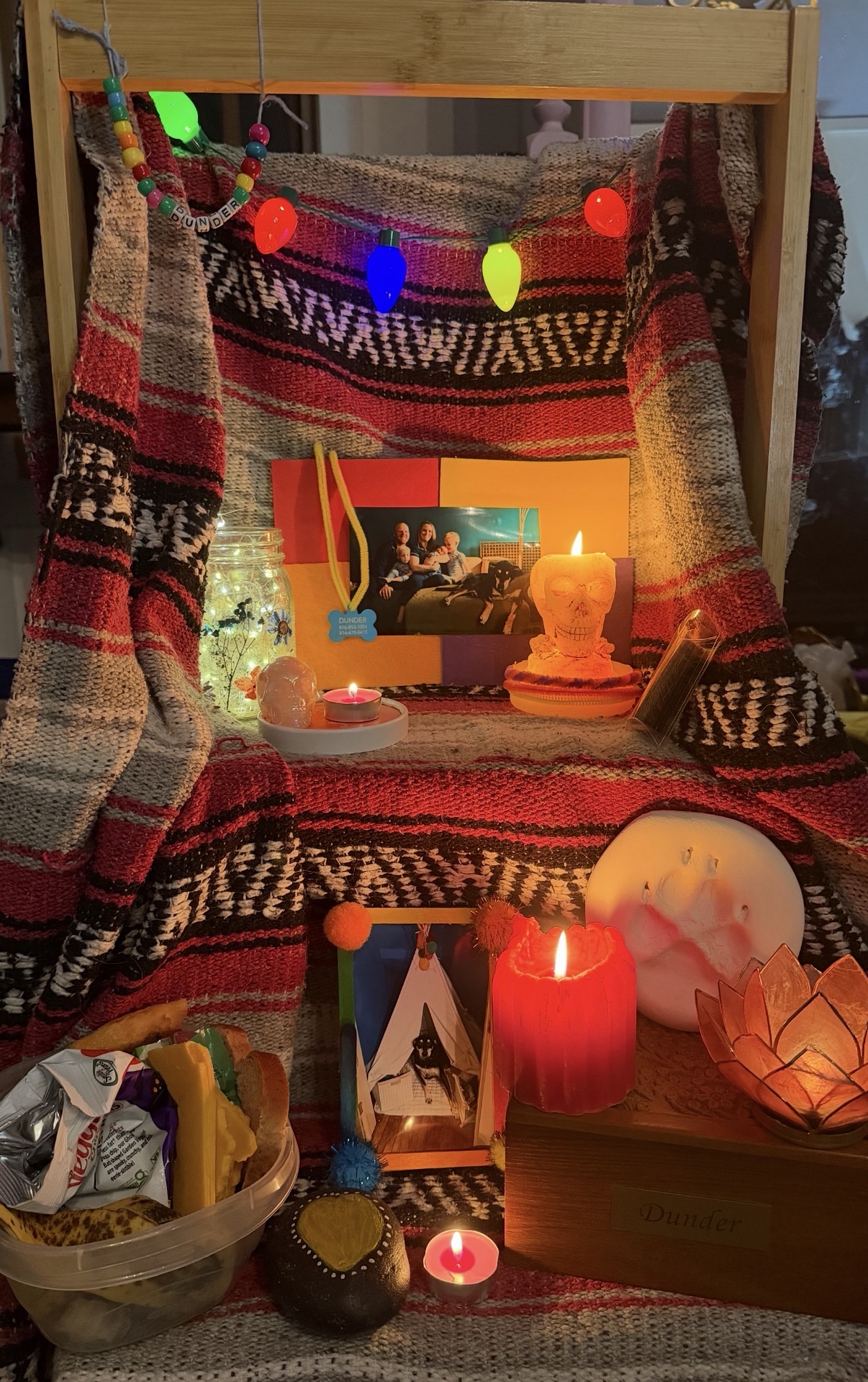
An employee created an ofrenda to celebrate and honor her dog who recently passed away.
The employee who recently lost her dog explained how she relies on rituals as a method for healing and connecting with those she’s lost. “I like rituals, so I find ways to honor my dad on days that were significant to him or us. For my dog, I sprinkled some of his ashes in his favorite park. I also made my first ofrenda on Día de Muertos para las Mascotas on an altar that included his pawprint, dog tag, some fur, and a few other things, but my favorite element was his offering. It was trash from the garbage. Weird, yes, but it was his favorite thing and made me laugh.”
Another employee who lost her daughter three years ago described visiting a memorial page on social media every day to read memories shared by family and friends.
Use Humor to Cope
Humor can be another way to cope with loss and is a form of self-care when some need a break from their grief.
A colleague shared a quote from comedian Bill Hicks that hangs above their work monitor: “Don’t worry, don’t be afraid. Ever. Because this is just a ride.” For them, the quote offers perspective on life’s unpredictability and brevity.
Another employee shared, “When I need to cheer up, I like to watch funny comfort shows, stand-up comedy specials, or listen to comedy podcasts. I recently heard Adam Sandler’s “Here Comes the Comedy” and loved these lines: ‘You need a fix, and you need it fast. How can you put all of this in the past? Who’s gonna be the hero to get you through the night? Who’s gonna wrap their arms around you and make everything alright? You know, it’s comedy.’ ”
Grief and Crisis Support Resources
While grief is natural, support can make difficult experiences more manageable. These resources may help.
Immediate and Mental Health Support
- 988 Suicide & Crisis Lifeline: Call or text 988 for free, confidential crisis support.
- Crisis Text Line: Text HOME to 741741 to connect with a trained crisis counselor.
- NAMI: nami.org provides mental health education and support resources.
Grief Support Groups and Activities
- GriefShare: Local and virtual grief support groups.
- Grief Journaling Prompts: Writing exercises from the University of Illinois Chicago.
- The Loss Foundation: Free grief worksheets.
- Lap of Love: Pet loss support and resources.
Helping Children Cope With Grief
- Children’s Books About Grief and Death
- Grief Activities for Kids
- Grief for Kids: Coping With Grief and Loss
Resources for Celebrating Día de los Muertos (Day of the Dead)
Learning to Carry Loss
Grief doesn’t always become smaller with time. Sometimes, we simply find new ways to carry it.
Whether you’re experiencing a recent loss, navigating a major life change, or supporting someone who is grieving, remember that seeking support is a sign of strength.
Grief is a natural response to loss, but we don’t have to navigate it alone.