
Create a Safety Plan Before Things Get Stressful

24 February 2026
During emotionally charged times, our team members take extra steps for self-care while supporting children and families working through trauma. One of those steps, having a safety plan, is crucial. And, if you are finding these days stressful and out of our control, you will want to develop a safety plan as well. Here’s how. 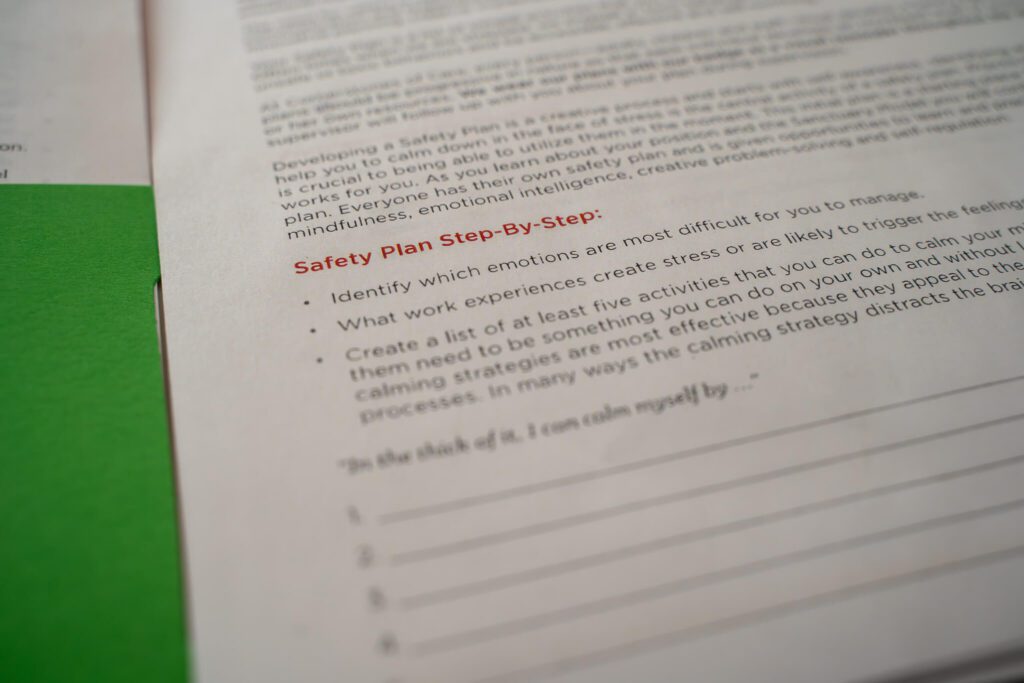
A safety plan helps us remain calm and regulate ourselves as things become stressful. These helpful stress reducers will not only serve you in the moment but cumulatively help relieve anxiety and potential burnout. Developing a safety plan while we are in a grounded and calm space is good preparation.
“Reactions when we are already triggered into fight-or-flight mode are often old patterns that may make a bad situation worse,” said David Irwin, Cornerstones of Care’s Director of Outpatient Services. “The simple act of considering how we respond gives us some power and options that we might not consider in the heat of the moment.”
Often, our team members who work in child welfare will experience secondhand trauma as they work with families, which can cause anxiety, burnout, and fatigue. As part of being a trauma-informed organization, Cornerstones of Care has maintained its certification through the Andrus Sanctuary Institute, a New York-based learning center that provides training and consultation to agencies that serve vulnerable adults, children, and families.
As part of the certification process, Cornerstones of Care team members are expected to develop a safety plan in writing that is kept on their person as they work.
Dusty Scheiter, Director of our IIS and IFRS programs in Missouri, is a member of the Sanctuary Circle, Cornerstones of Care’s voluntary committee that helps team members follow trauma informed processes. She says the first step in safety planning is Identifying what may trigger your feelings to go beyond your control. In general, it may be things like stressful topics or discussions with specific people that may cause you to escalate.
“You definitely want to understand your triggers, because if you can’t figure out which situations or emotions might overwhelm you, then you can’t plan how to manage them,” Dusty said.
Understanding the warning signs of escalation is the second key. Does your breathing become shallow? Do you clench your jaw? Do your palms sweat or feel your face become flushed? It may be time to engage your safety plan.
 Common actions in a safety plan include taking deep breaths or breathing patterns, such as box breathing or 4-7-8 breathing. Other common actions include going for a walk and getting out in nature or listening to music that is peaceful or has special meaning for you. It’s also important to identify a support person who can help you decompress or even remind you to follow your safety plan when you need it. Dusty also recommends what she calls a “five-minute brain break” by walking away from all electronics. While going for a walk, listening to music, or changing your surroundings may work in some situations, there may be times when you can’t walk out of a room.
“A good safety plan must also include things you can do when you are sitting in a meeting and can only do internal things such as focusing on breathing to help you calm yourself until you are able to step away,” Dusty said.
Once you have written your safety plan, it’s time to take it for a test run. Dusty suggests practicing your safety plan occasionally during periods of calm to be prepared for when you need it.
“You want to know how your chosen activities make you feel and trust that you can use them to calm yourself when the need arises,” she said. “It’s like a dress rehearsal – you’re practicing for the big show.”
Your safety plan may also change over time, and you should consider updating it as you discover new resources that meet your needs. By experiencing how you’ll be able to calm yourself, you’ll be able to identify how you’re feeling and how you’re going to manage your feelings. Like the Nike slogan, it’s important to Just Do It.
“You don’t have to be part of a Sanctuary-certified organization to learn how to manage stress,” Dusty said. “Every human being needs to know what they can do to recenter when things get tough and emotions run high. So—what are you putting on your plan?”