 While many families will head to the pool, take beach vacations, or even plan staycations at home this summer, drowning remains a serious and often underestimated danger. It is the leading cause of death for children ages 1–4 and the second leading cause of death for children ages 5–14.
When people think of drowning, most picture deep water. But infants and toddlers can drown in as little as 1–2 inches of water. A little slip or fall can cause a child to land face-down in water, where they may not have the physical strength or coordination to lift themselves up quickly enough, especially when they are startled and panicking. Any body of water poses a risk, from bathtubs to hot tubs, kiddie pools to in-ground pools, and rain puddles to oceans. Here are some important water safety tips to help keep your family secure this summer and throughout the year.
Quick Summary
Here is a quick checklist of items pulled from all the more-detailed checklists below.
1.
Always supervise children closely around water and never leave them unsupervised, even for a brief moment.
2.
Keep bathroom doors closed and use toilet lid locks.
3.
Children younger than 5 have thinner skin, making them more susceptible to burns. Always turn cold water on first for baths and hand-washing, and check the water temperature before letting your child touch the water.
4.
Enclose pools and hot tubs with a fence and self-closing, self-latching gate with a lock.
5.
Children’s bodies overheat much faster than adults, but they may not realize it or be able to communicate what is happening.
• Do not let young children under 5 use hot tubs.
• For older children, lower the temperature and limit use to 5-10 minute intervals with hydration breaks outside the tub to cool off. As always, have adults supervising.
6.
Choose appropriate neon-colored swimsuits for easy visibility based on your swimming environment.
7.
Ensure everyone in the home knows how to swim well by enrolling them in swimming lessons; however, don’t rely solely on swimming lessons to protect your family—approximately 66% of drowning victims knew how to swim.
8.
Establish and enforce safety rules such as:
• Swim with a buddy/never swim alone.
• Enter feet-first (no diving) to reduce the risk of injury.
• Avoid playing breath-holding games.
• Avoid pool drains.
• Avoid running.
• Wear water shoes in rivers and along lake beds.
• Stay at least 100 feet away from piers and jetties.
9.
Understand the water you are swimming in—river currents, rip currents, rip tides, water temperature, undertows, and ocean warning flags.
10.
Bathroom Safety
Water safety isn’t just important outdoors—it matters inside the home too. Bathrooms in particular pose three main risks: slips, burns, and drowning.
• Keep bathroom doors closed.
• Never leave your children unsupervised in a bathroom. More than half of all infant drownings under the age of one happen in bathtubs. Infant bathtubs and bath rings don’t prevent drownings. If a child slips or moves, they can quickly and quietly end up under the water or face-down in it without the ability to lift themselves up.
• If you are surprised by the doorbell or a phone call and have to leave the room, always take your child with you, even if it just for a brief moment. Do not rely on older siblings to supervise infants and toddlers.
• Keep bath items within reach so you don’t need to step away to get them.
• Children younger than 5 have thinner skin than older children and adults, making them more susceptible to burns. Always turn cold water on first for baths and hand-washing, and check the water temperature before letting your child touch the water. Using a faucet handle cover can also help prevent little hands from accidentally turning on the hot water.
• Keep the water level low during baths.
• Bathtubs and the surrounding area can become slippery. Use non-slip mats or apply an anti-skid surface on the bottom of the tub to help prevent falls.
• Toilets can attract the curiosity of little ones. Install a toilet lid lock to prevent the heavy lid from falling back down on them when they lift it and to keep them from accidentally tipping in headfirst when they lean over to play in the water.
Swimsuit Colors Matter
Research shows that the color of a child’s swimsuit can significantly impact how quickly they can be spotted in the water, and the visibility of a color depends on the type of water.
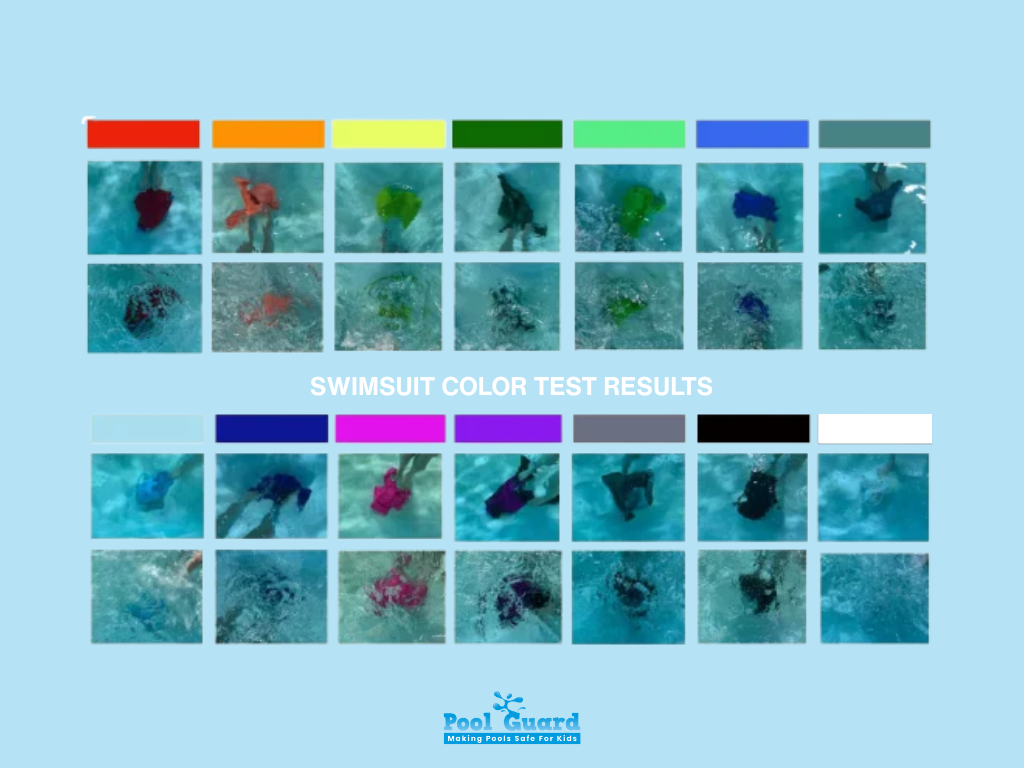
• In swimming pools, neon orange and neon pink have the best visibility. While darker colors may be visible in pools with light-colored bottoms, they can easily be mistaken for shadows, leaves, and dirt.
• In open water, neon green, neon orange, and neon yellow have the best visibility. Experts advise against white suits since they can resemble reflections of clouds.
• Although neon pink performed well in pools, it can practically disappear in lakes. This highlights why it is important to choose suit colors based on your swimming environment.
Pool & Hot Tub Safety
Home swimming pools and hot tubs offer hours of fun and relaxation for your family. And though they both have defined depths and clear water that allow you to see the bottom, they still pose significant risks. Here are some tips to make them safer:
• Children can easily access pools and hot tubs if they are not properly secured.
• Enclose them with a fence and self-closing, self-latching gate with a lock.
• Place a safety cover on them when they are not in use.
• Remove any ladders or steps used for access.
• Consider installing pool/spa alarms that go off if there is motion in the water.
• Choose swimsuits wisely. Colors that are more visible in rivers and lakes may be less visible in pools.
• Always have an adult within arm’s reach actively supervising (not playing on their phone) anyone in the water.
• Avoid alcohol while swimming or supervising. Alcohol impairs your judgment and reaction time.
• Ensure everyone in the home knows how to swim well by enrolling them in swimming lessons; however, don’t rely solely on swimming lessons to protect your family—approximately 66% of drowning victims knew how to swim.
• Water wings, pool noodles, and floaties give a false sense of security. Have young or less experienced swimmers wear U.S. Coast Guard-approved life vests that match the child’s weight and age. Ensure the vests fit snugly and don’t ride up over their chin or ears. Always read the vest’s label to confirm proper use, and fasten all buckles and straps before entering the water.
• Establish and enforce safety rules such as:
• Swim with a buddy/never swim alone. Encourage your children to use the buddy system, even if they are strong swimmers.
• Enter feet-first (no diving) to reduce the risk of injury if you hit the bottom.
• Avoid playing breath-holding games. These can lead to drowning.
• Avoid pool drains. Broken or uncovered drains can trap hair, clothing, or limbs.
• Avoid running. As people exit or splash around in pools and hot tubs, water escapes to the area surrounding them, making the concrete and tile slippery.
• Keep your pool or hot tub water clean and clear.
• Children’s bodies overheat much faster than adults, but they may not realize it or be able to communicate what is happening.
• It’s best to not let young children under 5 use hot tubs.
• If older children are using a hot tub, lower the temperature, limit use to 5-10 minutes at a time, then take a hydration break outside the tub to cool off. As always, have adult supervision.
River, Lake, and Ocean Safety
Pools and open water share many of the same risks, but open water has some additional hazards. Follow the swimming pool safety guidelines, along with these additions:
• Establish and enforce safety rules such as:
• Wear water shoes in rivers and along lake beds, where there may be jagged and slippery rocks, broken glass, and debris.
• Enter feet-first (no diving). You could hit a fallen tree or other unseen objects beneath the surface that can cause serious injury.
• Stay at least 100 feet away from piers and jetties, where permanent rip currents often exist.
• Swim in designated areas and at lifeguard-protected beaches.
• Don’t let children swim in deeper water than they’re comfortable with or capable of handling.
• Understand the water you are swimming in—river currents, rip currents, rip tides, water temperature, undertows, and ocean warning flags. Teach your children as they get older.
• Be aware of aquatic life—you’re in their home now.
Know the Signs of Drowning
Did you know drownings are often silent and happen without anyone noticing? What you see on television is very different from what actually happens in real life. Whether you’re swimming at the pool, floating on the river, or enjoying a day at the beach, you can help save lives by being aware of your surroundings and knowing the signs of a drowning:
• Head low in the water, with the mouth at water level; they may appear to be gasping.
• Rapid or labored breathing, which may look like gasping or hyperventilating.
• Glassy, unfocused eyes.
• If you call out and they don’t respond, they may be in trouble. Drowning victims are often focused on their own struggle and not what is happening around them.
• Most drownings are silent. Unlike the movies, there typically isn’t any shouting or splashing.
What To Do If Someone Is Drowning
If someone is in trouble:
• Get help from a lifeguard.
• If none are available, have someone call 911.
• Find something to pull them to safety – a pool noodle, rope, towel.
• Or throw them a flotation device to help them stay afloat.
• Entering the water should be a last resort. Panic can cause drowning victims to grab and pull under the person trying to save them.
• If there is no other option, approach from behind.
• Never put yourself in danger too. If a rescue is not safe, call 911 immediately and provide the location and details of the emergency.
Water can be fun and relaxing. With a few simple precautions, you can ensure wonderful, safe memories by the water for years to come.