No One Is Saved Alone – Merideth’s Message in November
3 November 2026
The people who shaped my life. The people who carried me through seasons when I could not carry myself. The people who saw something in me long before I could see it in myself.
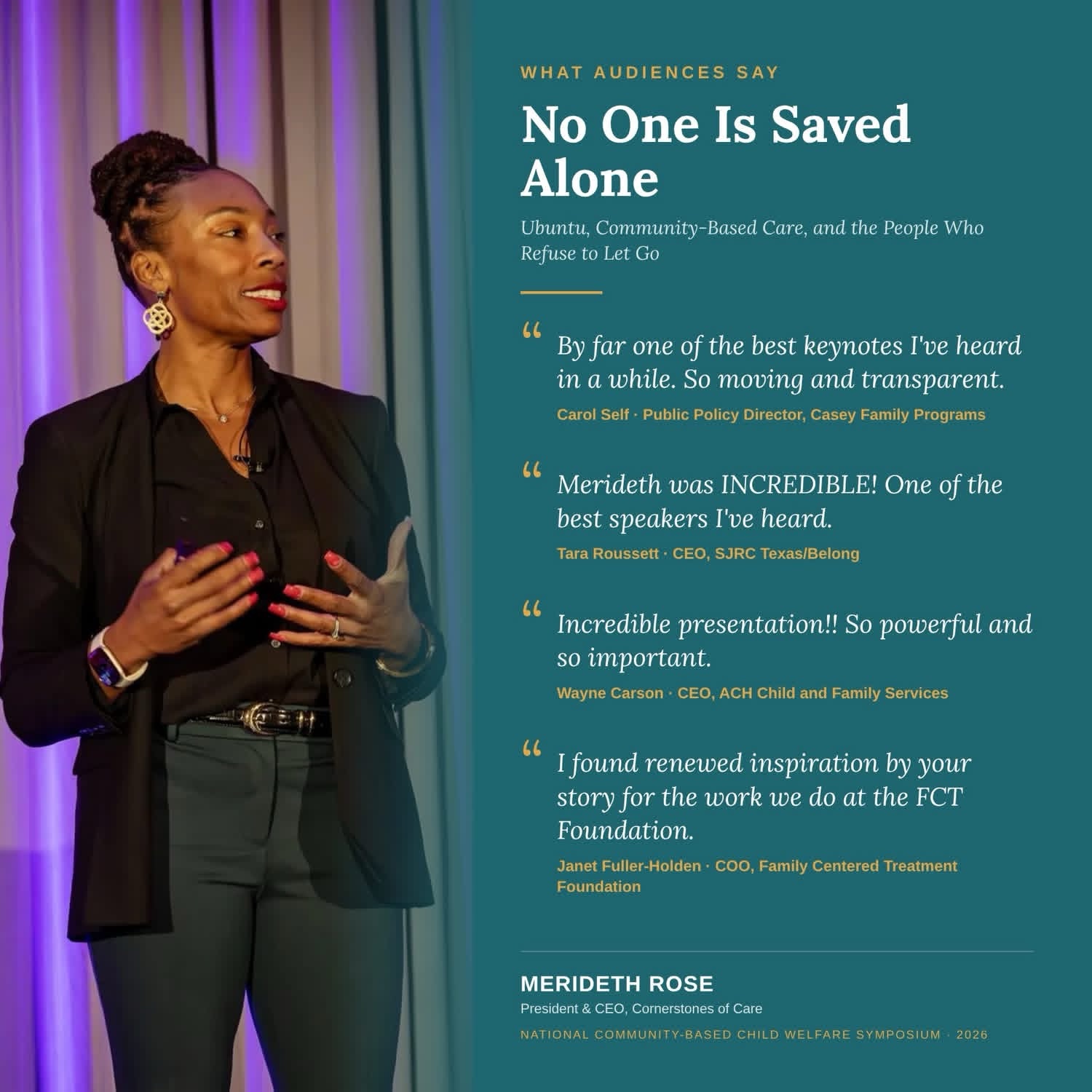
These were the thoughts running through my mind when I stepped off the stage following my keynote address at the National Center for Community-Based Child Welfare National Symposium in Nashville on October 20. As I reflect on the conversations from that day, one truth continues to echo in my mind: every meaningful chapter of my story was written in relationship with others.
While my keynote, “No One Is Saved Alone,” explored the power of community-based care and the philosophy of Ubuntu, it was ultimately a reflection on the very human reality that none of us becomes who we are on our own. Ubuntu is a philosophy often expressed as, “I am because we are.” It is a simple but powerful reminder that people do not thrive in isolation. We become who we are through relationships, belonging, accountability, and hope.
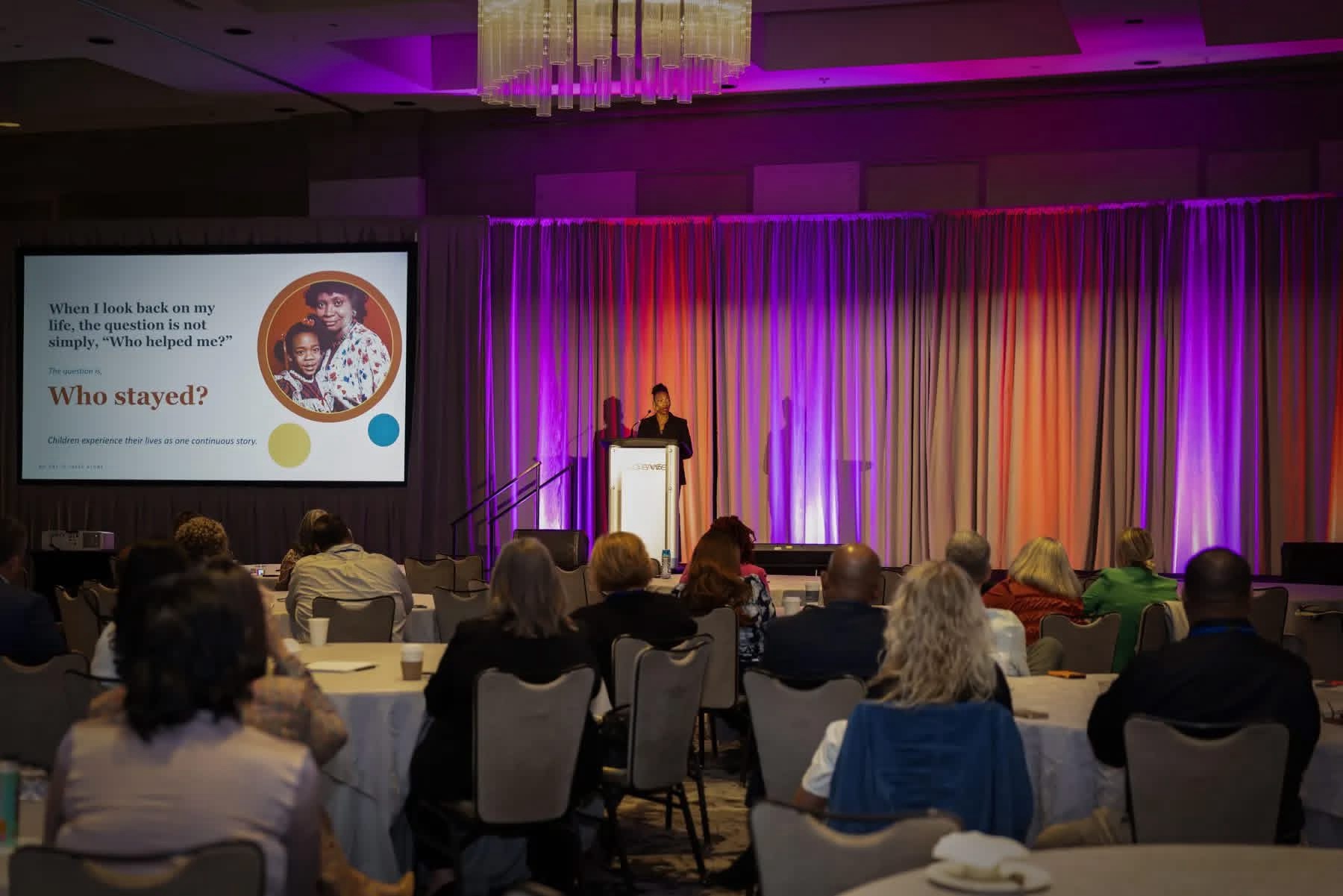
The message I shared in Nashville was deeply personal. I spoke about adversity, trauma, poverty, and the labels often assigned to children and families who find themselves involved with child welfare systems. I shared pieces of my own story, including moments when statistics and circumstances suggested a very different future than the one I ultimately found.
Yet the central lesson from my story is not about overcoming obstacles alone. In fact, it is the opposite.
Every meaningful turning point in my life can be traced back to people who chose to see me, stay with me, and help me believe in a future I could not yet imagine for myself. Friends. Mentors. Family members. Community members. People who refused to let go.
That experience shaped my belief that healing is relational and that lasting change happens through connection. It also explains why the theme of “No One Is Saved Alone” resonates so strongly with the mission of Cornerstones of Care.
At Cornerstones of Care, our work has never been solely about our services. Services matter. Systems matter. There are times when intervention is necessary to ensure a child’s safety and well-being. As an example, foster care serves an essential purpose and remains a critical support for children who cannot safely remain at home. At the same time, we must recognize that many families are struggling not because they lack love, but because they lack resources, support, and connection.
The reality is that two truths can exist at the same time: foster care is necessary, and foster care is often overused. The challenge before us is learning how to hold both truths while pursuing better outcomes for children and families. Too often, poverty, isolation, and unmet needs are treated as neglect when what families truly need is support.
That understanding drives Cornerstones of Care’s commitment to prevention, family preservation, behavioral health, education, foster care, youth support, and community-based care. We believe the strongest outcomes occur when families receive help before crises escalate, when children can remain connected to supportive relationships, and when communities have the resources needed to care for one another.
The goal of community-based care is not simply to deliver programs. It is to strengthen the relationships and communities that allow families to thrive long after formal services have ended. As I shared during the symposium, our responsibility extends beyond helping people navigate systems. We must help build communities where systems become less necessary because strong networks of support already exist.
That principle is visible throughout Cornerstones of Care every day.
We see it in foster families opening their homes to children in need. We see it in therapists helping youth process trauma. We see it in educators creating safe environments for learning. We see it in relatives stepping forward to provide care, mentors building trust with young people, and community partners ensuring families have access to housing, food, and other essential supports.
Most importantly, we see it in the 14,000+ children and families we serve every year.
Time and again, we witness what becomes possible when a young person is surrounded by caring adults, when a struggling family is met with support rather than judgment, and when communities rally around their most vulnerable members. We see lives change not because of a single intervention, but because of a network of people committed to walking alongside one another.
As I left Nashville, I carried with me a renewed sense of optimism. Across the country, there are dedicated professionals asking how we can better support families, share power, strengthen communities, and create pathways to healing. Those conversations matter because they remind us that real transformation happens when people come together around a common purpose.
At Cornerstones of Care, that purpose remains clear: building safe and healthy communities where children and families can thrive.
Because in child welfare, in community work, and in life itself, the truth remains the same:
No one is saved alone.
No one heals alone.
No one becomes alone.